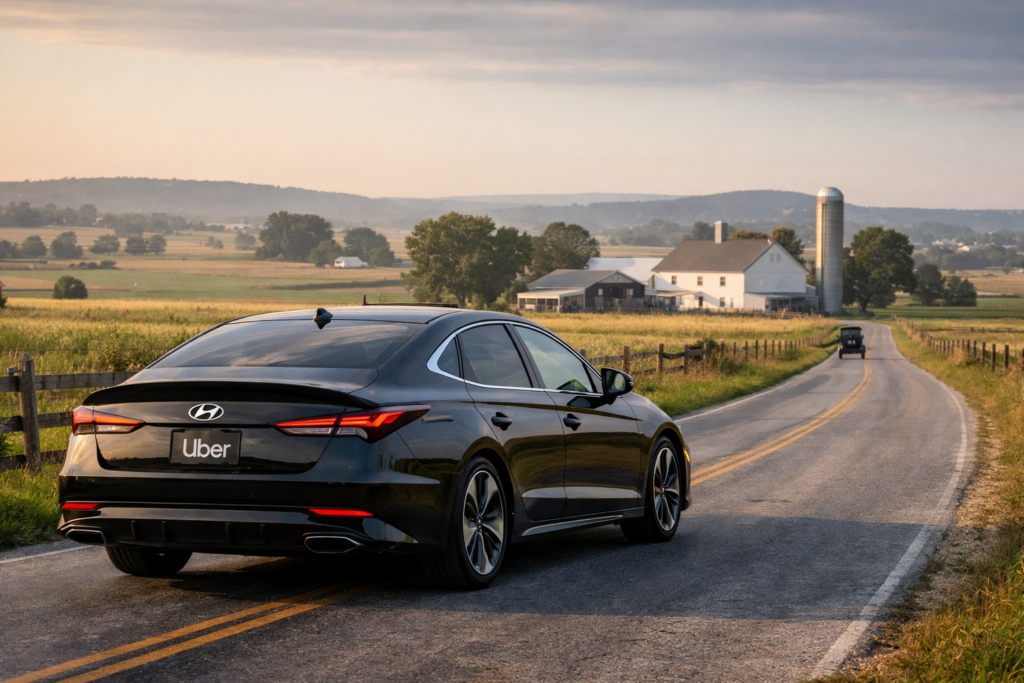
Uber is no longer just a ride-hailing company. It is evolving into a mobility platform where the driver may soon be optional.
The recent announcement of Uber partnering with Pony.ai and Verne to launch Europe’s first commercial robotaxi service in Zagreb marks a turning point. This is not a pilot experiment hidden in one city. It is a signal that autonomous taxis are moving into real, everyday use.
You can read more about the launch here:
What this really means is simple. Transportation is shifting from human-driven to system-driven.
What Is a Robotaxi and How Does It Work
A robotaxi is a fully autonomous vehicle that operates without a human driver. It uses a combination of cameras, radar, sensors, and artificial intelligence to navigate roads, detect obstacles, and make driving decisions in real time.
Learn more about robotaxis here:
These vehicles are trained using massive datasets and continuously improve through machine learning. Unlike human drivers, they do not get tired, distracted, or emotional. That alone changes the safety equation.
Why Uber Is Investing in Autonomous Taxis
Here’s the thing. Uber’s biggest cost has always been the driver.
By moving toward autonomous fleets, Uber can dramatically reduce operating costs while increasing efficiency. Vehicles can run all day and night, take more trips, and deliver consistent service.
This shift could lead to
Lower ride prices over time
Faster pickup times
Fewer cancellations
More predictable customer experience
At the same time, companies like Pony.ai are already proving that robotaxi operations can scale and move toward profitability.
For broader industry trends:
The Near-Term Future: What Will Change First
In the next three to five years, the biggest impact will be seen in large cities.
Urban environments are ideal because they offer
High ride demand
Shorter trip distances
Better road infrastructure
Strong network connectivity
Cities like San Francisco, Beijing, London, and now Zagreb are already leading the shift.
In these areas, robotaxis will likely operate alongside human drivers at first. Over time, they will take over high-frequency routes and peak demand zones.
However, adoption will not be perfect or immediate.
There are still real challenges
Handling unusual road situations
Building public trust
Managing safety perception
A recent real world ride experience highlights both the potential and the limitations:
Impact on Uber Drivers and the Gig Economy
This is where the biggest tension lies.
Autonomous taxis directly impact millions of drivers who rely on platforms like Uber for income.
But the transition will happen in phases
Phase one: Robotaxis and human drivers operate together
Phase two: Robotaxis dominate specific zones and routes
Phase three: Human drivers shift to niche roles
Those niche roles may include
Premium rides
Customer-preference services
Rural or low-demand coverage
Specialized transportation needs
So while the long-term outlook suggests fewer driving jobs, the short-term reality is coexistence.
Will Autonomous Taxis Work in Small Towns
Right now, autonomous taxis are built for cities.
Small towns present a different challenge.
Lower ride demand means fewer trips per vehicle
Less structured roads create more complex driving scenarios
Lower profitability makes investment harder
Because of this, small towns will likely adopt robotaxis later.
But they will not be left out.
The future in smaller towns may look like a hybrid system
Human drivers covering most demand
Autonomous vehicles operating on fixed or high-demand routes
Shared ride models optimized by AI
Over time, as technology becomes cheaper and more reliable, expansion into smaller markets becomes more realistic.
Broader Impact on Society
Autonomous taxis are not just about transportation. They will reshape multiple parts of daily life.
Urban planning may change as parking demand decreases
Electric robotaxi fleets could accelerate EV adoption
Elderly and disabled individuals gain more mobility independence
Commuting time becomes usable time for work or rest
At the same time, important questions remain
Who is responsible in an accident
How is user data handled
What happens to displaced workers
These are not just technical issues. They are policy and social challenges that will define how fast this transition happens.
The Bigger Picture: Uber as a Mobility Platform
Uber’s strategy is becoming clear.
Instead of building everything itself, it is partnering with companies like Pony.ai and others across the world. This allows Uber to focus on what it does best: connecting riders to transportation.
In the long run, Uber could become the operating system for mobility, where users do not care whether the vehicle is human-driven or autonomous.
More insights on Uber’s partnerships:
https://www.phocuswire.com/news/technology/uber-verne-ponyai-robotaxi-autonomous-vehicles
Conclusion
Autonomous taxis are no longer a distant idea. They are already being tested, deployed, and scaled.
In the near future, big cities will see the biggest changes. Small towns will follow later with hybrid models. Drivers will not disappear overnight, but their role will evolve.
What this really means is simple.
Transportation is moving toward a system where availability, efficiency, and automation matter more than ownership.
The question is not whether robotaxis will become normal.
It is how quickly people will accept them as part of everyday life.